

Day 2 of the Venice Film Festival was a big one: the highly anticipated, and Oscar-pegged, titles of Jay Kelly, Bugonia, and After the Hunt revealed themselves to the world for the first time (After the Hunt during a press-only screening). Results were interesting, if not all that surprising. Prior to the festival bows, Joseph and I were predicting that Baumbach’s Jay Kelly and Yorgos Lanthimos’s Bugonia would score a good reception, while After the Hunt would score a poor one.
The big winner of the day was Bugonia, which saw the master of the absurd-meets-the-transcendent Lanthimos landing hard with cinephiles. Some saying a return to form (wait when did he leave?), all saying Bugonia was a fascinating distillation of Lanthimos’s most relished themes of power, control, alienation and an unmistakable cruelty and fragility beneath the surface. While some reviews were ecstatic, some were weary about its Oscar chances, leaving us with no doubt about its quality but some doubt about its prospects for awards-adulation. If you’re aware of Lanthimos’s brilliant modern-day-set pieces, this comes as no surprise. Bugonia always smelled more like The Killing of a Sacred Deer than Poor Things.
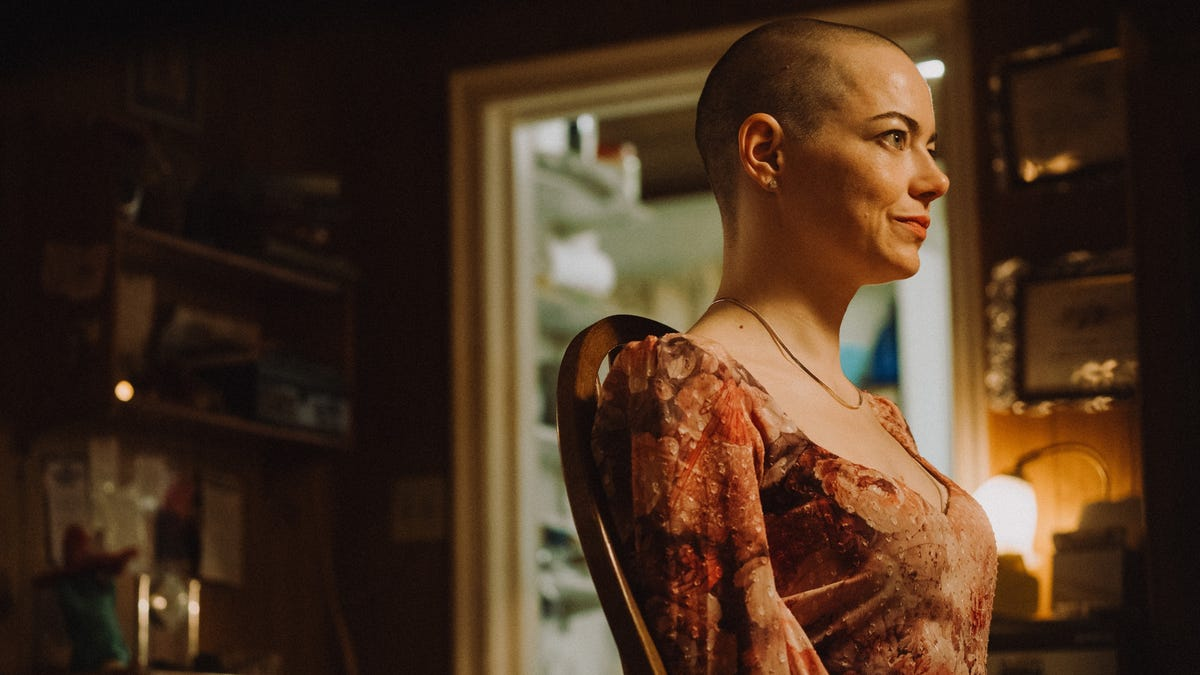
Right now, given Focus Features has another big film in the wings (Hamnet), we’re a bit skeptical about the film breaking into Best Picture: it seems more like a strong contender for Emma Stone and Jesse Plemmons in lead acting categories, screenplay, and possibly a couple of below the line mentions. Best Actor is stacked, which hurts Plemons, while Best Actress is a dearth this year, which significantly helps Stone, who could land her SIXTH Oscar nomination at 36 (and fourth with a Lanthimos film). Wow. But those factors (mainly that she’s already been handsomely awarded for her talents) will be her biggest hurdle.
Here’s the enthusiastic reception by The Playlist, The Hollywood Reporter, Variety, Indiewire and Vulture. The Guardian is a bit more conservative but still positive.

Next was Jay Kelly, which was not a big hit with the cinephiles on Letterboxd, and was politely received overall by critics. Most critics admit this is far from Noah Baumbach’s best work, but they’re also appreciative of the film’s wistful proficiency, and many said they were deeply touched by the film’s ending (some, like Indiewire, credit the “Hollywood ending” for bringing the film across the finish line in a respectable state). The standouts are easily Adam Sandler for his gentle and rich portrayal, and George Clooney for what some critics (like The Times) say is his best performance ever. Expect them both to gun for Supporting Actor and Lead Actor noms. The supporting cast is said to be a big asset (such as Laura Dern, Billy Crudup, and Alba Rohrwacher), but only Sandler and Clooney seem to be the Oscar contenders.
I would not call the reception to Jay Kelly unanimously praised. It may have an 87% on Rotten Tomatoes, but only a 64 on Metacritic, signaling a bit the film’s middle-of-the-road impression. It did receive a 10-minute standing ovation, among the longest so far into the festival; that’s worth noting. Given that the film is about the industry, and that it performed decently overall, we can’t count out Jay Kelly for a Best Picture nom: it seems clear there will be voters who will respond positively to a world they know all too well, even if many others will be disappointed by the film’s sentimental and self-indulgent tendencies, and somewhat shallow insight into fame.
The Guardian provided us with highly negative review of the film, no small thing; Time, Variety and The Hollywood Reporter and decidedly mixed; and Screen Daily, Vulture and The Playlist are decent-to-good.

Next was After the Hunt’s press screening. Around 2 AM we were monitoring the instant reactions post-screening on Letterboxd and were puzzled to see reactions falling all over the place. A substantial group seemed to loved Guadagnino’s take, while many others were more cold. Some saying it was a masterstroke, other saying there were left confused and alienated by an unusually dull Luca. Well, we woke up this morning to find After the Hunt with a 48% Rotten Tomatoes score and a 56 Metacritic score.
As we said in our last podcast, Joseph had read an early draft of the script, and many red flags were pointing to this film being a rare miss for Guadagnino, despite the usual hyperbole by film twitter and renown Oscar predictors. Seems we were right.
Many critics think the film’s script is muddled, overlong, and at times incoherent—making the moral dilemmas feel unresolved rather than compelling. They call out the film for being overly earnest or pretentious (TIME says it’s a “pretentious bore”), and bluntly heavy handed. Some viewers even worry it undermines the seriousness of the #MeToo movement by wandering into murky portrayals of complicity and loyalty—that sounds like something that could seriously hurt any Oscar campaign in this politically charged climate.
The clear highlight is unmistakably Julia Roberts, who is said to give her fiercest, iciest turn ever. Many call it a career-highlight, Oscar-worthy, emotionally layered and highly impressive. Some are sure she’s still a strong possibility for a Best Actress nom. However, with a poorly received film, and a prickly subject matter with uneven execution, Roberts might be fighting to squeak in 5th place. Her success will depend on the other contenders fighting for that last slot. To her benefit, Best Actress is weak this year, but Roberts already has an Oscar (which means voters won’t necessarily feel she’s owed recognition), and if she’s in a film that stands to displease voters more than enthrall/impress (like 2022’s haunting TÁR, which had somewhat similar themes), then she will miss the cut. Amazon/MGM will mount a big campaign for her, but it looks too dicey from our vantage point.
Of the rest of the cast, the one that got people’s attention the most was certainly Michael Stuhlbarg, whose turn is said to be memorable. Some say the film’s most impactful moment occurs between Roberts and Stuhlbarg. If the Roberts campaign pans out and she’s able to take one other actor into the fold with her, it would be this highly respected craftsman who has yet to be given his flowers. From the reviews we read, Garfield and Edebiri didn’t make enough of a lasting impression, with some pointing out that Edebiri’s character can come off more as a narrative device than fully fleshed-out—her motives feeling opaque and diminishing emotional connection.
Given the reception, the film will be most likely a Roberts-only play. Will it happen though? And for what is the lowest reviewed film of Guadagnino’s career thus far?